Wednesday, February 27, 2013

Facebook--A brave new world for ministry

I remember back in 2004, I was a lay minister at the ELCA's campus ministry at the University of Nebraska. Each summer, the ELCA campus ministers all gather for a conference--while I was there, one of the speakers told us how important it was for us to make sure that whichever university we worked with gave us a university email address, something that ended with a .edu. The reason, he said, was because there was this new website called "Facebook" that had started out with some California colleges, and college kids were signing up and using it to tell their friends what they were doing and to meet new people. It had just recently gone national, but in order to register, you had to have an address that ended with the .edu suffix. He said the thing had grown like wildfire and he wouldn't be surprised if soon it wasn't the primary way college kids kept in touch. 

It's less than 9 years later now. You no longer need a university email to register. Facebook is used by people of all ages, companies, non-profits, churches...in fact, if Facebook were a country, it would be the third most populous country in the world. Most of my extended family live in different parts of the country than I do, and Facebook has become our primary means of keeping in contact. Even my 85 year-old grandmother (Hi Grammy!) has a Facebook account, and loves to see pictures, videos, and stories of her grandkids and great-grandkids' daily lives.

Facebook has changed the way we do relationships. 

The church, as the body of Christ, has always been about relationships. If we've seen such a fundamental addition in our personal and business lives about how we connect, then it only makes sense that it would have an effect on our faith communities as well. How do we as a church live into this brave new world of digital connectedness? 

First of all, we need to be a part of it. We have this amazing tool at our fingertips (literally!) that allows us to create groups, allows us to instantly be in touch with a huge variety of people, allows us to quickly and easily make available pictures and ideas, and not only allows us to put these things out there for consumption, but encourages feedback and communication. It allows us to have a significant presence in the daily lives of our parishioners if we so desire. If church leaders have personal Facebook profiles and post about their daily lives, it also helps break down those invisible walls that many people have, assuming that pastors or other church people aren't "real people" like everyone else.  

Second, we need to model how to use social media well, responsibly, and spiritually. There is so much crap out there that gets passed around on Facebook and other platforms. What previously had been relegated to chain emails (or chain snail-mail) can now be instantly linked, viewed, commented on, and passed along even more efficiently. That said, there's a lot of good stuff out there too. We need to be wise in what we post and how we post it, modeling how to integrate our faith in with our lives.

Third, while social media is no replacement for in-person contact, we need to remember the power of social media to help us stay connected in times when we ordinarily wouldn't be. A very powerful example is when a congregation's high school seniors leave for college. In the past, we'd have to wait for breaks to see them again and catch up, perhaps sending a letter or a care package once in a while. Now, all it takes is a "like" on a picture they posted, and they know that someone from church is thinking about them...or jotting a quick note on their wall. Or sending a private message if they posted about breaking up with their girlfriend or bombing a test just to check in and show support. 

I have a real-life example of this sort of thing. Back in 2010, the young man who had been my congregation's seminary intern the previous year was killed in the earthquake in Haiti. Ben Larson was one of those people who was beloved by pretty much everyone who met him. At the time he was with our congregation, I was the youth director, and he and I had become good friends. We had worked together closely in a number of areas, one of which was the Confirmation program. When the earthquake happened, I was at Luther Seminary for my January on-campus intensive courses, and even in the midst of my own grief I felt horrible guilt that I wasn't back home to be there for the congregation's youth who had looked up to him so much. So I took to Facebook. I posted a message in our youth group page inviting anyone who needed to talk things through to do so, and did the same on my personal wall. I'm getting teary-eyed right now as I remember this, because thanks to Facebook I was able to have conversations with some of my church kids, and even more importantly, they were able to minister to each other. One such exchange was so powerful, in fact, that I cut and pasted it into a Word document and saved it to my computer just to keep for future reference. I'm going to post it here...all the names have been changed (except mine and Ben's). I didn't fix any of the misspellings or grammatical mistakes, either...this is the way the conversation transpired with me and 3 high school freshmen:

Jane
I don't see why this had to happen. Ben was such a great person, why did he deserve this?
Yesterday at 9:03pm ·

Jane
It's not freaking fair.
Yesterday at 9:05pm

Matt
Jane...you're right. It's not fair. It sucks, and there's no getting around that. Ben didn't deserve this. At times like this, all we can do is cling to God's promises, trusting that God loves us and is mourning alongside us, and remembering Romans 8: "For I am convinced that neither death, nor life, nor angels, nor rulers, nor things present, nor things to come, nor powers, nor height, nor depth, nor anything else in all creation, will be able to separate us from the love of God in Christ Jesus our Lord." That's the kind of love that Ben lived his life knowing, and spent his life showing to those around him.
Yesterday at 9:50pm

Mary
Jane, he's touched so many lives, and still is. I know he's touched mine. While I was crying in English randomly when Ms. Smith had to bring up Haiti I texted Tom and we were talking and I told him how I can't help but be angry with God. And Tom said at one of the confirmation meetings Ben said when you are at your low points in life that's when you get closer to God. I know am, and times like these are our true test of faith.
Yesterday at 10:29pm

Matt
Mary, you're so right. God doesn't give us those low points in life, but God does work through those low points, helping us remember that he's with us through it all...good and bad. And so often, it's those low points where we lean on God the most and draw closer to him.
Yesterday at 10:36pm ·

Tom
We are all going to miss him so much. And this tragedy will bring us closer to God, and be a major point in our faith stories.
12 hours ago

Matt
I'm so proud of all of you guys right now...it's important to ask these hard questions, and it's important to support one another through the pain and anger and sorrow and grief that we're all feeling. That's part of "living among God's faithful people." You are living that out.
12 hours ago ·

Mary
Thanks so much, Matt. I really do feel like we are all supporting one another and it's really great to know who's all behind us. I sometimes forget were not alone in this world. And Tom, your completely right.
11 hours ago

Mary
And Jane, sorry for flippin out at lunch today. Apparently, you and I grieve differently and I just didn't know how to handle it. I was angry when I found out then sad the next day, and I just didn't want to talk about it. Sorry.
11 hours ago

Jane
Its totally cool Mary. We all have our own way of grieveing. Mine is talking about it and just letting it go. And your right tom, this would be a big part in our faithstories. but i just didn't want to say it when i was 14. I wanted it to be when I was older and i could handle it a lot better. Matt, I just don't see why this all has to happen. He waas working for him the whole time, and he made him die while he was in the middle of serving him. It's not fair.
4 hours ago

Matt
Jane...I completely share your anger at the unfairness of all of this. But I don't think God made him die. I think God is right beside us, grieving the loss of one of his greatest servants on earth, but reminding us at the same time that he's already overcome the power of death. It's times like this where all that stuff we talk about in Confirmation actually make a difference in the real world...it's not just church talk. These horrible, awful things that we see happening, our pain at losing our friend, our knowing that there may be as many as a half million other stories in Haiti just like this one...THIS is when the cross makes a difference. THIS is when the promise of resurrection, and Jesus' promise that he will ALWAYS be with us in Matthew 28 all make a difference. It doesn't take the pain away, it doesn't make things any more fair, but it gives us hope when life seems to be at its darkest.
3 hours ago

Jane
I have always thought it was church talk. Your right. Now is the time to do all that. It's just really hard for me to deal with something like this.
3 hours ago


Matt
Jane, I don't want to give the impression that I'm calmly sitting here hugging the cross nicely with a warm fuzzy feeling. Like you (and so many others) I'm dazed, bewildered, angry, and heartbroken...and I am clutching so fiercely and tightly to the cross and God's promises because there's honestly nothing else I can hold on to in the face of all of this.

I'm glad you're able to be so open about how you feel, because I'm sure there are plenty of others who feel the same way and haven't been able to (or haven't felt like they should) put words to it.
3 hours ago 

Wednesday, February 13, 2013

"A broken and contrite heart, O God, you will not despise."

My son is 9 now...this is a story from when he was 4, and is something I remember every year on Ash Wednesday:

For the previous two or three days, Kiddo had been looking forward to Ash Wednesday. He couldn't stop talking about going to church and having the pastor put the ashes on his forehead. He told his friends at daycare, he told his friends at preschool, and he couldn't stop telling Mommy and Daddy how excited he was about the ashes.

Our church has two Ash Wednesday services--one at 5 PM, and the other at 7. We had planned on going to the 7:00 service as a family, and I was scheduled to assist with the imposition of ashes at that service. That afternoon, though, I got a call from Sweetie--she was 8 months pregnant and had been fighting a pretty good cold--saying that she just didn't think that she'd be able to make it through a worship service.

I couldn't just take Kiddo to the 7 PM service myself, since I was going to be up front, and we knew that Kiddo would have none of sitting with someone else. And we also knew that if he didn't go to church, he'd be crushed. Sooooooo...I left work early, picked him up from daycare, and took him to the 5 PM service.

On our way, he asked, "Daddy, why will we put ashes on our forehead tonight?"

Hm.

Well, we had talked about death before...the subject had first come up when we were talking about Easter some time ago...and he understood the concept that only Jesus had come back to life, but once we were dead, we would live in heaven with God, but wouldn't be alive again on earth. And, more importantly, he was fine with that understanding. So, rather than using the more generic answer of "to help us remember how much God loves us," I decided to expand it a little bit.

"It's to help us remember that even though someday we'll die, that God loves us..."

Kiddo finished my sentence for me. "...and we'll be in heaven with God. And Jesus." (I decided to hold off on dealing with his 4 year-old tritheism...all in good time.) =)

He seemed satisfied with it all. And so we got to church, and the service began. There was a responsive chanting of Psalm 51, followed by a time of confession, and then came the imposition of ashes. We were about 2/3 of the way through the psalm when suddenly, Kiddo grabbed my leg and looked up at me. His lip was trembling.

And then he began to cry. The heartrending, plaintive, authentic cry of a child in anguish.

I sat down, took him on my lap, held him close, and whispered, "what's wrong? Is the music too sad?"

Looking at me with a scared, sad, expression in his eyes, he whispered back, "I don't want the ashes on my forehead."

I was dumbstruck. This had been the highlight of his week! I asked him, "why not?"

He looked me in the eyes.

"Daddy, I don't want to die."

I almost burst into tears right then and there. Somehow in our conversation, he had internalized that having the ashes put on his forehead would make him die.

I immediately felt like the worst dad in the world. Ever. I had made my son think that he was going to die. And worst of all, that I would let him.

I held him tightly, and rocked him, and whispered assurances that this was just something to help us remember how much God loves us, and that it was not going to make us die.

As Psalm 51 came to a close and the rest of the congregation intoned "the sacrifice acceptable to God is a broken spirit; a broken and contrite heart, O God, you will not despise," I wiped the tears from Kiddo's eyes, and he smiled.

"Okay, Daddy. I want to remember. I want to go get the ashes now."

Later that evening, when I told the story to our pastor as we got ready for the 7:00 service, he turned to me and said, "You know, those tears meant your son gets it. In his way, he gets the meaning of Ash Wednesday better than the majority of the other people in the pews."

He was right.

Wednesday, February 06, 2013

June 27, 2010 sermon: Freed From Fear, Freed For Service


Freed From Fear—Freed For Service
June 27, 2010

If I were to make a top 10 list of the greatest works of Western literature,  Les Miserables, by Victor Hugo, would be somewhere on that list.  It’s an amazing story of sin and redemption, of love and hope and pain and loss, and ultimately of law and grace.  The main character in the story, Jean Valjean, spends 19 years of hard labor in prison for stealing a loaf of bread so he could eat.  Prison hardens him, gives him an edge, makes him distrustful of everyone around him.  His attitude becomes one of “hurt the other person before they have a chance to hurt you.”  At the end of his 19 years, he is paroled, but is forced to carry a yellow ticket everywhere with him and show it to anyone he comes into contact with, so they know he’s a parolee.  For Jean Valjean, being freed only becomes a new kind of imprisonment, and makes him even more cynical and bitter.  Four days after being let out, he arrives, cold, hungry, and broke, at the house of a bishop.  Nobody will house him or feed him or give him work.  He’s desperate.  And angry.  Here’s the scene from the 1998 movie…you may recognize Liam Neeson as Jean Valjean:


Don’t forget.  Don’t ever forget.  You’ve promised to become a new man.  Jean Valjean my brother, you no longer belong to evil.  With this silver, I have bought your soul.  I have ransomed you from fear and hatred.  And now I give you back to God.” 

God’s grace transforms our fear into lives of loving service.

What the bishop did for Jean Valjean was an act of costly grace.  The bishop sacrificed his pride, his silver, and his sense of justice.  But in taking that act, he did something that Jean Valjean never could have done for himself.  Not only did the bishop ransom him from fear and hatred, he ransomed him for a purpose.  He said “And now I give you back to God.”  An act of complete and utter selflessness broke Jean Valjean’s bondage to living for himself…it gave him the freedom, and the mission, to live his life for the sake of others
.
My friends, what we witnessed in that scene was the power of cross-shaped grace in transforming our lives.  It is that same power that Paul concerns himself with in our passage from Galatians.  We’ve heard over the past few weeks about the identity struggle that the early church had.  The church saw itself as a sect of Judaism, so they had that heritage and those laws to look to, to help shape their identity as a people.  However, they were also attracting a large number of non-Jews to the faith, especially as it began to spread into areas that were not primarily Jewish.  The question became, how do we handle these folks who didn’t grow up with these laws, customs, and heritage?

There was nothing wrong with Jewish Christians continuing to observe the Jewish purity rites…clean and unclean foods and the like.  In the first section of our Galatians passage, Paul is pointing out what he sees as blatant hypocrisy on the part of Peter.  He had begun to eat with Gentile Christians—non-Jews—and by extension had been lax on the Jewish food laws.  But then, when some Jewish Christians came to Antioch where he was, he stopped eating with the Gentiles.  The implication was that in not following Jewish law, these Gentile Christians were second-class citizens. 

And that’s what got Paul’s blood boiling.  In verse 14, he recounts a showdown he had with Peter, telling him, “If you, though a Jew, live like a Gentile and not a Jew, how can you compel the Gentiles to live like Jews?”

Touché.

Then he gets into the meat of his argument, telling Peter, “We ourselves are Jews by birth and not Gentile sinners.”  One of my seminary professors says, “there are two kinds of people—those who divide everything into two groups, and those who don’t.”  Paul is one who does that…in his eyes, one is either a Jew or a Gentile.  He’s saying that even those who have been Jews from birth, those who have been given the gift of the law, are unable to be saved by that law.  So why then is Peter using the law to divide the community?  Observance of the law does nothing for a person’s eternal life, whether that person is Jew or Gentile.

Why?  Because God’s grace transforms our fear into lives of loving service.

You and I, we hear this passage and immediately our thoughts turn to our individual salvation.  Martin Luther interpreted it in that sort of context, and we, as 21st Century Americans, we whose very identity is defined partially by our rugged individualism—of course we’re going to think in those terms as well.  There’s nothing wrong with that, and we’ll get there eventually.  But that wasn’t Paul’s primary concern.

His main concern was with community.  His concern was that the Jewish Christians were using the law to exclude other Christians, instead of standing unified under the cross as the sinners that we are.  He reminds Peter, and us today, that our identity as humankind isn’t that we fulfill the law, but rather the opposite, that there is nothing any of us can do to live up to the law’s demands.  God’s law wasn’t given to divide.  God’s law was given to draw us all to the power of the cross.  Paul is pointing out that every time we draw lines that seek to divide or exclude, we are always going to find God on the other side of the line.  “If justification comes through the law,” Paul writes, “then Christ died for nothing.”

The silent question the bishop was asking Jean Valjean, the silent question Paul is asking the Galatians, and the silent question our Scripture passage asks of us today are all the same question: are you going to live lives of fear, or are you going to live lives of grace?

While it’s an important question to ask ourselves individually, it’s an even more important question to ask ourselves corporately, as those who are called to be Christ’s body on earth.  The world looks at the church and it sees a body that builds walls.  It sees a body that divides.  It sees a body that lives out of fear more than out of grace.  Sometimes these conclusions are unfair, but quite often we as the church—the whole, universal, worldwide church—have given the world good reason to come to those conclusions. 
However, God’s grace transforms our fear into lives of loving service.

Now this doesn’t mean that we’ve been given free license to do whatever we want, to live however we want to live.  The bishop didn’t tell Jean Valjean “with this act of grace you’re free to do whatever you want to do.”  Paul even says “But if, in our effort to be justified in Christ, we ourselves have been found to be sinners, is Christ then a servant of sin?  Certainly not!”  What it does mean is that we’re living by a different set of motivations.  We don’t serve others to build up points to try to get to heaven or win God’s favor.  In fact, the cross is what has freed us from all of those old insecurities, all of those doubts, all of those fears that we just don’t measure up, that God can’t possibly find us acceptable, that there’s no way that we can earn a spot in heaven.  You know what?  There is no way, no way at all, that we can earn ourselves a spot in heaven.  Nothing to worry about.  We can’t do it.  But the cross, the empty tomb, God’s promise to us through Christ, that is what’s done the job for us.  The word that Paul uses over and over in this passage, the one translated “justified,” is the greek word dikaios.  It is a courtroom word, and has the sense not of actually being innocent, but of being declared and treated as though we were innocent.  Through the cross, God sees our guilt but still acquits us.  It’s not a whitewashing of sin, it’s God grabbing us by the collar like the bishop did to Jean Valjean, looking us right in the eye, and telling us, “Don’t forget.  Don’t ever forget.  You’ve promised to become a new person.  My brother…my sister…you no longer belong to evil.  With this cross, I have bought your soul.  I have ransomed you from fear and hatred.”

God’s grace transforms our fear into lives of loving service.

So we are free.  Free to break down the walls that fear has built.  Free to live in community with those we agree with, as well as those with whom we disagree.  Free to live not for ourselves but given the mission to live in loving service to others.  Free to recognize that God’s law doesn’t divide one person from another, but rather unifies all of us as one gigantic category of people—redeemed sinners at the foot of the cross.     

Amen.

Matt Schur
Our Saviour’s Lutheran Church
Lincoln, NE   

Wednesday, January 02, 2013

December 29-30 2012 sermon--What Child Is This?


What Child Is This?
Christmas 1C, December 29-30, 2012

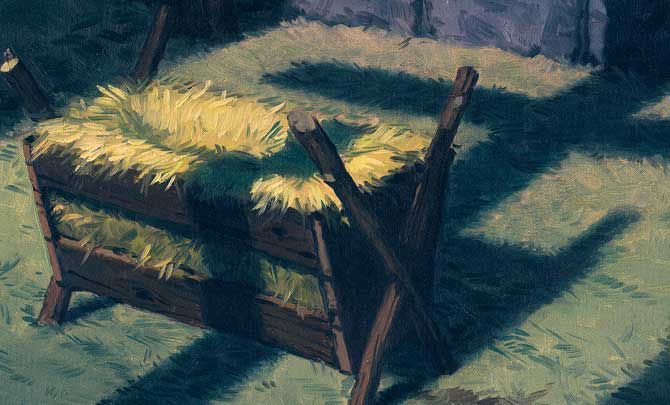
On Monday and Tuesday, we celebrated the birth of Jesus. We looked on with awe and wonder at the story of Mary and Joseph, of angels, and shepherds, and an animal feed trough turned into a makeshift crib for a little baby boy. We sang “Silent Night” and “Away in a Manger,” chuckling to ourselves as our own children and grandchildren sang the line, “the cattle are lowing, the poor baby WAKES!”

Babies are cute. They’re fun to play with. They’re cuddly and loving, and it’s a wonderful thing to think of Jesus as a helpless, cute, cuddly newborn infant.

But today is less than a week after all of that, and all of a sudden, here’s Jesus as a 12 year-old kid. No longer the cooing little baby, he’s now only a year away from his bar mitzvah. If he was a member of Our Saviour’s, he’d be acolyting and taking sermon notes and going to confirmation classes. This was a kid on the verge of puberty, whose parents were taking him along for a fairly long trip—from Nazareth to Jerusalem, which would be a distance of about 60 miles. Think about walking from the Haymarket in Lincoln to the Old Market in Omaha…only there was no Interstate 80 connecting the two. It was a dusty and potentially dangerous trek which could take up to 4 days, so Mary, Joseph and Jesus most likely didn’t travel alone. They would have been with a large group of family and friends, all of whom would have been making the annual pilgrimage to Jerusalem for the Passover.  This trip was also a personally and religiously significant one—to be in Jerusalem, at the temple, to celebrate Passover was a big deal, and in v. 41 the author tells us that it was a trip that Mary and Joseph made every year.

So when it’s all finished, they leave to go back home with the rest of their group. At the end of the first day, Mary and Joseph make a horrible discovery. Their child, Jesus, isn’t with the rest of the group. As a parent myself, I can’t even imagine the terror, fear, and guilt that they must have felt. And so they turned around and went back to Jerusalem. The author tells us that they searched for three days, finally coming to the temple where they saw him surrounded by the teachers of the law. He was listening to them and asking them questions, and we’re told that the teachers were amazed at his understanding and his answers.

His mom didn’t care about any of that, though. Her fear and terror and guilt had vanished, and had been replaced by anger. “Why have you treated us like this? Your father and I have been searching for you with great anxiety.” The Greek here is much more strong than our English translation suggests—the word used here is used two other times by the author of Luke, and in both cases it’s not just anxiousness—it’s the pain and grief and agony you experience when you know you’re never going to see someone you love again.

And Jesus’ response to her is a reminder that Jesus wasn’t their little baby boy anymore.  “Mom,” he says, “Didn’t you know? Didn’t you know I’d be in my Father’s house? Didn’t you know I’d be about my Father’s business? You’ve taught me the Scriptures. You’ve raised me in your faith, the faith of Abraham and Isaac and Jacob, the faith of the Exodus and the Passover, and you’re surprised to find me here? You’re surprised to find me with the teachers of the law? You’re surprised to find me learning and  understanding, questioning and teaching, engaged in this living faith in which you’ve so diligently brought me up?”

This isn’t the cute, cuddly baby in Bethlehem talking. Jesus throws the adults in his life for a loop. His parents didn’t know where to find him. The teachers of the law were astounded at his interactions with them. The question for all of them, and the question for us today, is, “What child is this?”

What child is this?

Does this baby remain in the manger? Does this child remain at the feet of the teachers? No, and no. In fact, the next time Jesus pays a visit to the temple, those who are there are equally astounded at what he has to say, but this time it’s not with the cute bemusement with which one pats a precocious child on the head and thinks “Wow, you are something else.” The next time Jesus is at the temple, his questions and his understanding don’t get him compliments, they get him crucified. When the baby leaves the manger, when the child grows up, when we can no longer hold Jesus at arm’s length, when Jesus has the audacity to turn our world upside down by challenging what we thought we knew about God and about faith and about life, our human response then and our human response now is he same—it is the cross.

We love Christmas. But Jesus can’t stay in the manger. The fact that God would take on human flesh and would be born as a helpless baby is miraculous—it is itself a sign of God’s wonderful love for humankind and of God’s willingness to do whatever it takes to break into our world and into our lives. But for Jesus to do what Jesus has come to do, he can’t stay a baby. He must grow up. And when he grows up and begins to think and feel and act and teach and command and live and love on his own, for himself, by his own volition, his parents aren’t sure what to do with it. The religious experts, amazed as they are, probably aren’t sure what to do with it. And we, when we’re honest with ourselves, aren’t sure what to do with this Jesus either. It’s easier to sing “sleep in heavenly peace” than to wrestle with “love your enemies.” It’s easier to sing “away in a manger” than to try to understand “blessed are you when you are poor or hungry or hated or excluded or the one who makes peace.” It’s easier to think of angels and shepherds than to try to live out the command to “take up your cross and follow.” We’d rather look at the bright star in the sky over Bethlehem than watch an innocent man lifted on a cross at Golgotha and listen to him say, “Father forgive them, for they know not what they do.” 

What child is this?

Babies are safe. Babies are cute. But the Jesus who was born for us, the Jesus who lived for us, the Jesus who died and was raised so that we too might live, the Jesus who is alive and among us even today, did not come to be cute. He did not come to be safe. He came to change our lives. He came to change the world. Like Mary and Joseph, even though we know better sometimes we’re surprised when Jesus tells us, “Didn’t you know I’d be in my Father’s house? Didn’t you know I’d be about my Father’s business?” We’re surprised when we come to church and we hear a word of law or a word of grace or a word of comfort or a word of affliction and it’s exactly what we needed to hear. We’re surprised when we confess our sins and are blown away by a wave of gratitude in the words of forgiveness. We’re surprised when we pray and are heard. We’re surprised when those around us become the body of Christ, become hands, feet, ears, mouth, and eyes for those around them. Like the teachers of the law in the temple, we’re surprised when Jesus answers our questions with love and holy wisdom beyond our understanding. We’re surprised when Jesus takes what we thought we knew about God and scripture and turns it all on its head. We’re surprised when we’re called out beyond ourselves to live and love for the sake of the other.

This is the Jesus who’s active in the world today. This is the Jesus who’s active in our lives today. This is the Jesus who is here today, the Jesus who has swept us all up in this restless, raging love of God. This, this, is Christ the King.

What child is this?

Nails, spear shall pierce him through
The cross be borne for me, for you.
Hail, hail the Word made flesh
The babe, the Son of Mary.

Tuesday, December 25, 2012

Christmas Day 2012 Sermon - The Light Shines in the Darkness


The Light Shines in the Darkness
John 1:1-14, Christmas Day, 2012

“In the beginning was the Word, and the Word was with God, and the Word was God. 2He was in the beginning with God. 3All things came into being through him, and without him not one thing came into being. What has come into being 4in him was life, and the life was the light of all people. 5The light shines in the darkness, and the darkness did not overcome it.

Eleven days ago at Sandy Hook Elementary School in Newtown Connecticut, we saw the darkness. We watched in horror, in shock, in anger, in grief, as 28 people, 20 of them first grade children, lost their lives in an act of unspeakable evil. My wife and I struggled, even in our own grieving and questions, with how to talk with our kids about it, how to assure them that they could feel safe even while living in a world where the darkness of evil, the darkness of sin, the darkness of our own brokenness, surrounds us. I know we weren’t alone in that struggle.  Which is why today’s gospel reading is so important, why the birth of Jesus in a barn in Palestine 2,000 years ago is important, why today of all days, Christmas Day, we hear a gospel reading not of shepherds and wise men, not of stars and angels, but of the God who was there in the very beginning, the God who with a word created the heavens and the earth, the God who proclaimed “let there be light!”, the God who took on flesh and lived among us, the God who IS the light that shines in the darkness, the God that no amount of darkness can overcome.

Today, we need Christmas.

We need to hear that we have not been abandoned to the darkness. We have not been left to our own devices, to our own will, to our own strength. Whether it is a first grade classroom in Connecticut, or a pink slip at work, or the bottom of a booze bottle, or the pang of hunger before bed knowing that it will have only grown by morning, or the fear of what will happen after a doctor’s diagnosis, or the relentlessness of Mother Nature, or the betrayal of a loved one, or of anything else, we know the darkness. We’ve experienced the darkness. The darkness is a very real thing, and no amount of tinsel or wrapping paper can cover that up.
This Christmas morning, we worship a God who chose to be Immanuel, God with us, who chose to take on flesh, to come to us through the upside down power of humility, who chose a way not of glory, but the way of self-giving love for the sake of the other, the way of the cross. We worship a God who is the light shining in the darkness. We worship a God who the darkness has not overcome.

Over the last week or so, many of us I’m sure have heard attempts to explain the darkness we saw in Connecticut, as well as the larger darkness of sin and evil. We’ve heard from various sources that evil acts like what we saw in Connecticut or the week before in Oregon happen because we’ve taken God out of the public square, or because we’ve removed God from the schools. This isn’t a message that began recently, either.  Every year we hear about the “War on Christmas,” every year we’re warned that if we say “Happy Holidays” instead of “Merry Christmas,” or if the money we spend and the credit cards we max out and the stores we keep open late between Black Friday and December 25 aren’t in honor of Jesus, or if we don’t have a manger scene in the town square, that we will have taken Christ out of Christmas.

Our Christmas Day gospel account, as well as the very message of Christmas itself, tells us that nothing could be further from the truth. We don’t have the ability to remove God from anywhere. It’s not possible for us to take the baby Jesus and hide him away, safely out of sight. Any thinking about who God is or what God can do or what God IS doing that gives humankind the ability to manipulate God for our own purposes is much too small for what we read in the first chapter of John. Jesus IS Immanuel, God-With-Us. Jesus IS the light of the world, and that light shines not in the halls of power, not in the good, proper, places where we might otherwise  expect, but in the darkness. It shines in our sinfulness. It shines in our brokenness. It shines in a Bethlehem stable. It shines at the dinner table with prostitutes and tax collectors. It shines with the lepers and the sick and the outcast. It shines on the cross. It shines in the empty tomb.

And Jesus, light of the world, God-With-Us, shines yet today, bringing light to the dark. God cannot be removed from the world God made, the world God loves, and the world God is redeeming. God simply will not be kept out.  That’s the beauty of the story of Christmas. God breaks in. God breaks through.  

We don’t act on God, God acts on us. We don’t come to God—God comes to us. We can’t take God out of any part of our individual or societal life, because God is God, we are not…and God has promised to be with us always, even to the end of the age. And so, according to John, according to what we celebrate at Christmas, according to the Incarnation, we don’t put God anywhere or take God anywhere. God finds us. God comes to us. God comes alongside us in our darkness, and doesn’t just shine a light…God is the light. God becomes the light.

The light shines in the darkness, and the darkness did not overcome it.

Where we should expect God to be is exactly where we see the shadows, where we see the darkness, where we see the sin and pain and suffering and brokenness in our world. And not because that’s the way we would have it, but because that’s the way God would have it. God is right there in those dark places and in the dark places of our own lives shining the light of God’s own self, the light of Christ, the light of God’s peace, God’s hope, God’s wholeness, God’s shalom and dispelling the fear of our own dark nights.
This baby in the manger is the same God who was present at the beginning of time, at the creation of the universe.

This baby in the manger is the same Word who was spoken to Abraham and spoken through the prophets, the Word of redemption and of new life and of a blessing for the entire world.

This baby in the manger is the same relentless God who cannot be pushed out or kept back, the God who took on flesh and took on our humanity, the God who was executed by the worldly power of empire.

This baby in the manger is the same Living Word who through his resurrection three days later refused to allow death to have the final word.

This baby in the manger is the same God who refuses even today to let us go, who promises us still that there is nothing in heaven or on earth that can separate us from God’s love.

The light of Jesus shines in our darkness. And the darkness did not overcome it.

Amen.

Monday, October 29, 2012

Confirmation Sermon from 10-28-2012: "Let Your Light So Shine!"


Let Your Light So Shine!

October 28, 2012: Confirmation Sunday

 It was about 9:30 on Saturday night at the Sounds Like Love music festival in the Twin Cities back in 2008. About 400 high school youth had been rehearsing for over 6 ½ hours, singing songs, learning choreography, turning notes on a page into music for people’s hearts, and everyone was tired. Voices were straining, the movements weren’t as crisp as they had been hours earlier, and it was getting hard to stay in focus and on task. There was a section of a Christmas song they were rehearsing where different groups of youth were supposed to shine their mini-flashlights at different times, and it just wasn’t working the way it was supposed to. Finally, in a fit of directorial frustration, conductor John Jacobson cried out, “Twinkle, you little Lutherans, twinkle!!!”

In Jesus’ sermon on the mount from the gospel according to Matthew, he said: “You are the light of the world. A city built on a hill cannot be hid. No one after lighting a lamp puts it under the bushel basket, but on the lampstand, and it gives light to all in the house. In the same way, let your light shine before others, so that they may see your good works and give glory to your Father in heaven.”
At some point in your lives, you were brought to church. You were brought to a baptismal font, and you were baptized with water and with words of promise. Promises were made…God’s promise that you are a loved, forgiven and cherished child of God. Promises made by your parents and your sponsors to raise you in the faith, to teach you the Lord’s Prayer, the Creed, and the Ten Commandments, to place in your hands the Holy Scriptures, and to walk alongside you as you learn and grow in your faith. The fact that you are here today means that along the line, someone took those promises seriously. And then, chances are, near the end of the baptismal service, a candle was lit and someone said those words we heard from the Sermon on the Mount: “Let your light so shine before others that they may see you good works and glorify your father in heaven.”

Or, in the John Jacobson translation, “Twinkle, you little Lutherans, twinkle!”

Those words are a reminder that a life in Christ is not merely an adoption, but also a calling. Can’t you just imagine Jesus standing in front of us? Sometimes in encouragement, sometimes in frustration, but always in love, crying out “Let your light shine! Twinkle, you little Lutherans, twinkle!”
You were created to twinkle. You were created to do good works. You were created as that city on a hill, you were created to be that lamp that doesn’t belong under a bushel, but that gives out light so that others may see. That’s not what gets you right with God, it doesn’t score you God points or get you any closer to heaven, because that part’s not up to you. That part’s already been done for you. Paul writes in the letter to the Ephesians that you were saved by grace through faith, and this is not your own doing, it is a gift of God, so that no one might boast. Jesus died on the cross and rose for you. You have been forgiven, you have been made new through your baptism, and there is nothing in heaven or on earth that can separate you from God’s love in Christ. Good works aren’t what you’re saved BY…good works are what you’re saved FOR.  In verse 10 of Ephesians 2, Paul writes, “for we are what he has made us, created in Christ Jesus for good works, which God prepared beforehand to be our way of life.” You were created to shine, you were created to twinkle.

The thing about light is that when you shine it on something, it allows you to see things as they really are. We use shadows to hide. We use darkness to conceal things. You all know as well as I do that the best games of hide and seek are played in the dark, because you can hide yourself so well. But when Jesus calls us to let our light so shine before others, we are being called to help the world see things as they really are. We are being called to help the world see the things that we try to hide in the dark, to see the people who are so often buried in the dark. We are even called to see the truth of our own situation, that there are things about ourselves that we’d rather leave in the dark, that we are in bondage to sin and cannot free ourselves.
It’s only when we let that light shine in the dark places that the dark places can begin to be transformed. Over the past three years you’ve done quite a bit of light shining. In your small groups you’ve gotten to know each other better, but you’ve found ways to serve your neighbors and serve the world. You’ve helped raise money for our brothers and sisters in Tanzania. You’ve collected food and diapers for those in need. You’ve helped serve meals, you’ve assisted people who haven’t been able to take care of themselves. You have been active participants in God’s mission in the world, a mission of making all things new, a mission of bringing healing and hope to a world that is broken and so often in despair. At the time, you may have thought that these were small things, or that they were hoops you needed to jump through as a requirement for Confirmation, but in reality, these good works that you have done were big, very big…and they weren’t just hoops for you to jump through, they weren’t just something to do to get a service and fellowship requirement out of the way for the month. They were a way that you were living out not just your baptismal promises, but even more basic than that, who you were created by God to be and what you were created by God to do.

Where else can you shine this light that you have been given? Where else can you shine the light of love, the light of hope, the light of truth, the light of service, the light of peace? These aren’t just big flowery words, they are opportunities you’re given every day to continue to be who you were created to be. How is God calling you to shine your light at home? What about at school? What about in the community? What about with your friends? What about at church? Because even though we’re not taking attendance anymore, even though you don’t have to worry about signing in for Sunday School or how many sermon notes you need or any of that stuff, I pray that this is only the beginning of your light shining days. You have so much inside of you to share, so much light that the world desperately needs. You have talents, and time, and joy, and intelligence, and each of you has those in very unique ways. You each have a light, but each light has a unique glow. Someone once said that your calling is where your great joy meets the world’s great need. Today as you are confirmed, it is not the end, but it’s a step on the journey, a time for you to take these promises that were made on your behalf at your baptism and to say yes, these are now mine. This is my faith, this is my calling, this is my light to shine.

Your parents, your baptismal sponsors, your Confirmation guides, your Confirmation mentors, your family, your friends, your church…we are all a part of this incredible journey of faith with you. We’re here to walk alongside you, to encourage you, to be encouraged by you, to lead you, and to be led by you as together we look to the cross. Some days, the journey is hard, other days it is easy. Some days we walk with uncertain steps, other days we stride ahead confidently. But being a part of the body of Christ means that we journey together, not always knowing where we are going, but assured that God’s hand is leading and guiding us. This journey of faith that we are on—you are a part of it, an important part of it.

 I’ve said it before and I will continue to say it until I’m blue in the face that you are not the future of the church—you ARE the church RIGHT NOW. You are valuable, you have a voice, you make a difference. You are a part of Christ’s body on earth, you are the light that is shining for the world. So twinkle. Twinkle, you little Lutherans, twinkle!

Matt Schur
Our Saviour’s Lutheran Church
Lincoln, NE

Sunday, October 28, 2012

October 20-21 2012 sermon--"Power from God, Power for Others"


Power from God—Power for Others

I’m an older brother. I have one sister who’s three years younger than me. When we were young and my parents went out in the evenings, we’d have a babysitter—but there came a point in time when we were old enough to be left on our own for a few hours. My parents left us with rules, of course, but in a very real sense we were in charge of ourselves. Which meant, as far as I was concerned, that I, the big brother, was in charge of my little sister. And so we’d get out the big, tall Tupperware cups and mix up huge servings of chocolate milk, which we hardly ever were allowed to drink, and when we did it certainly wasn’t as chocolatey as we wanted. We’d put in so much chocolate sauce that there’d be a thick layer of chocolate on the bottom of the cup when we were finished drinking. And we’d get out our favorite records—that’s right, actual vinyl on a record player—that our parents owned. Sometimes it was the soundtrack from American Graffiti, but more often it was Barry Manilow’s Greatest Hits. And we’d turn up the stereo higher than we knew mom and dad would let us had they been there, singing and dancing to Copacabana and I Write the Songs and Mandy.
We were such rebels, my sister and I.
 
While mom and dad were gone, we had power. We were in charge. And it was all about us. It was all about what we wanted.
 
And as the older brother, really, it was all about me.
 
If my sister did something I didn’t want her to, I was bigger. I had ways of making her stop. I had ways of convincing her that what I wanted to do, what I wanted to eat, the way I wanted things to go, was also what she wanted. I was usually nice about it, but also sneaky, persuasive, and selfish.
 
Jesus said in our Gospel reading, “You know that among the Gentiles those whom they recognize as their rulers lord it over them, and their great ones are tyrants over them.43But it is not so among you; but whoever wishes to become great among you must be your servant,44and whoever wishes to be first among you must be slave of all.”
 
Power from God is power for others.
 
Lord Acton is often quoted as saying that power tends to corrupt, and absolute power corrupts absolutely. It’s also been said that those who have power seek to find any way to keep the power they have, and those without seek to find any way to obtain it. When Jesus was speaking, the example he was using of what not to do, how not to live, was the Roman Empire. They had power, and they made sure they kept their power through means of persuasion much more violent than I used with my sister. They had chariots, and weapons, and for those who dared to challenge their authority, they had crosses. Theyre was peace in the Roman Empire, the Pax Romana, but it wasn’t the peace which passes all understanding, it wasn’t the wholeness of the Hebrew word shalom, it was merely the lack of violence kept by the fear of violence. And for those who would have been listening to Jesus, the many crosses which often lined the roads filled with those who had dared to challenge the power of Rome and disturb that peace were symbols and stark reminders of that power.
 
Yes, there was power in the cross. The power of death. The power to get people to do what Rome wanted.
 
But what Jesus told the disciples, and what Jesus tells us today, is that power from God is power for others.
 
As Christians, we too know that there is power in the cross. But it’s a different kind of power that what Rome understood. Not the power of death, but the promise of life. Not the power to get people to do our bidding, but the promise of freedom. Not power to be grasped and held on to at any cost, but power to be given away. Not power to serve our own interests, but power to serve our neighbor.
 
Jesus tells us today that we, all of us, are called to be servant leaders.
 
We who follow Jesus are called to see power in a different way than the world does. We are called to use power in a different way than the world does. It’s not about us. It’s not getting what we want and holding on to what we deserve. It’s about helping our neighbor get what they need and showing others the same sort of love and grace that we ourselves have been shown, love and grace that we never could have earned. These gifts that we have been given, whether they’re authority or power or possessions or money or love or forgiveness or anything else, aren’t intended to stop with us. They are absolutely for us—the kids who did First Communion instruction with me this past spring will remember how important those two words are—“for you.” The bread and wine, the body and blood, the water and word of baptism, the cross and the empty tomb—these are all absolutely and without a doubt for you. But you’re not where they stop. God’s gifts for you don’t end with you. You are blessed to be a blessing.
 
Power from God is power for others.
 
When we follow in the way of the cross, it may not mean our physical death, but it does mean we die to ourselves. We die to our need to be the center of it all, our curved-in nature that is the very definition of sin. We die to our bondage to ourselves. We are saved from our slavery to self, and saved for service to our neighbor. And when that’s how we live, when that’s how we’re oriented, when our view of our neighbor and of power and of all we’ve been given has been shaped by the cross, then we’re already living in the kingdom. We’re already experiencing a foretaste of the feast to come. We’ve already taken that place of honor at Christ’s table—the honor that comes not from grasping, but from giving. The power and the peace that brings wholeness and life. Abundant life now, and eternal life always.
 
For the Son of Man came not to be served but to serve, and to give his life a ransom for many.
 
Which is infinitely better than Barry Manilow’s Greatest Hits.

Monday, September 24, 2012

September 22-23, 2012 sermon--"Questioning Jesus"


Questioning Jesus
September 22-23, 2012

Back in 1995, Joan Osborne sang a song that was later named to VH1’s list of Greatest One-Hit Wonders of the 90’s: “One of Us.” It was later used as the theme song for the TV show Joan of Arcadia. Throughout the song, the singer asks a number of questions, one of which is, “If you were faced with him in all his glory, what would you ask if you had just one question?”

Over the summer, we had the opportunity to tackle a bunch of those kinds of questions. Big, basic, foundational questions of the faith. Questions that many times we don’t know the answer to, but somehow we feel that we should, and are ashamed to ask.

And it’s not just faith questions that do this to us, isn’t it? We don’t like to ask questions, because to ask a question means that there’s something we don’t know, and for some reason, we live under the impression that we’re supposed to know it all and have it all together. I can’t count the number of times when someone has come up to me and started talking about something where I had NO idea what they were talking about. Sometimes they may have assumed that I had prior information, sometimes they may have just been talking and assuming that I was following where they were going, but for me, it quickly became abundantly clear that I was very much in the dark.

Do you think I stopped them and said something like “I’m sorry, what do you mean?” or “I’m just not following” or something along those lines? No. Maybe I didn’t want to look stupid, maybe I didn’t want to look like I didn’t have it all together or didn’t have the answers. I just nodded and smiled and listened, and after the conversation was done racked my brain or kicked myself for not knowing and then on top of it, kicked myself for staying quiet and worried and wondered if they know that I hadn’t been following them.
I hope I’m not the only one who’s done something like that.

Jesus’ disciples were in the same boat in today’s reading. Actually, the full story begins even before our reading. Turn in your Bibles to Mark 9:14. Verses 14-29 tell a story of something that happened right before today’s reading. There’s a boy with an unclean spirit that’s causing convulsions, and the disciples have been unable to do anything about it—in fact, as Jesus approaches, they’re in the middle of an argument with the scribes who had gathered. Jesus chastises them all, even the disciples, in verse 19, saying, “You faithless generation, how much longer must I be among you? How much longer must I put up with you? Bring him to me.” You can almost hear the frustrated sigh in his voice, as even after the time that his disciples have spent with him, there’s still so much that they don’t understand. They don’t understand who he is, they don’t understand who they are, and they don’t understand who they are called to be. After he casts out the spirit, the disciples ask him in private in v. 29 why they couldn’t have done it, and his answer basically is that they didn’t pray.

So we have that embarrassing setup before we get to today’s reading. The disciples have been embarrassed by not being able to do something they thought they should have been able to do, and they were almost certainly embarrassed by Jesus’ disappointment. So in verse 30, they pass quietly through Galilee and Jesus takes that time not to stop and heal people or feed people or do any of these amazing miracles that he had been doing, but as they travel he teaches them. It’s as though he’s realizing that his disciples weren’t getting it, that he needed to go back to the beginning, to the foundational stuff.

And so we get to verse 31, where he tells his disciples quite explicitly what’s going to happen to him. He says that he will be betrayed into human hands, and that he would be killed, and that on the third day he would rise. But look then at verse 32, keeping in mind what had just happened in the previous story. “But they did not understand what he was saying and were afraid to ask him.”

In Mark’s account of the gospel, the disciples remain clueless pretty much all the way through. They are constantly getting things wrong or not understanding what Jesus is saying or doing. Even at the end of Mark, after the resurrection, the angel tells the disciples that Jesus has risen and would meet them in Galilee and that they were to go there, and what do they do? They stay in Jerusalem, and tell no one. So for the disciples to not understand Jesus in this instance isn’t a surprise, but now, they were afraid to ask him. They were embarrassed, they were afraid…instead of wanting to gain further insight into the truth of the strange things Jesus was saying, they nodded and pretended to understand, just like we do so much of the time.

And what was the result? Arguments. Infighting. Division. When they arrived in Capernaum, Jesus asked them what they had been arguing about on the way, and like a group of kids being confronted by a parent, nobody wanted to tell him, because they had been arguing over who was the greatest, and they knew that he wouldn’t have liked that argument. Their focus was completely the wrong one, and they knew it.

Because in their non-understanding of Jesus they had cut off communication, their focus was not on who Jesus was or what Jesus was about, but on themselves. Alyce McKenzie points out four possible causes of the disciples’ argument:
  • fear that they have fallen in Jesus'estimation (9:19)
  • insecurity at their failure to heal the boy (9:29)
  • resentment toward one another as Jesus chastises them 
  • eagerness to compete to regain his approval[1]
The first letter of each of those reasons spells out F-I-R-E. Last week, we heard from James’ letter that the tongue is a fire, and indeed these arguments over our own power, over our own prestige, when we’re trying to save face and establish or re-establish our credentials, generate heat. And then we hear this week from James 4:1-3:
4:1 Those conflicts and disputes among you, where do they come from? Do they not come from your cravings that are at war within you? 2 You want something and do not have it; so you commit murder. And you covet something and cannot obtain it; so you engage in disputes and conflicts. You do not have, because you do not ask. 3 You ask and do not receive, because you ask wrongly, in order to spend what you get on your pleasures. 

When we hear this passage from James, it’s easy for our minds to go immediately to our stuff. Asking for things, and receiving things. Possessions. But this passage also provides a commentary on our gospel passage and what’s going on with the disciples. It wasn’t just a piece of information that they didn’t understand that they needed clarification on. They didn’t get Jesus. They really, truly did not understand who he was, or what he was about. Their focus was on their own reputation. It turned inward, and when we curve inward like that, when it becomes about us and our standing and our place, then we too don’t get Jesus. We don’t understand who he is or what he’s about, or what we’re about as his followers.

What’s Jesus response to the disciples? He tells, and then he shows. To explain who he is, to explain what he’s about, to help them understand that his power is found in weakness, that life in him is found in death and resurrection, to help them understand their own calling, he takes their argument and turns it on its head. “Whoever wants to be first must be last of all and servant of all.” Your greatness, your glory, your place in the Kingdom of God, is found in lowliness, humility, and your willingness to be a servant. Not just a servant of those who deserve it, not just a servant of those you like or those you agree with or those whose lifestyles or choices agree with yours, but a servant of all. A servant of your enemy. A servant of the outcast. You are to go even so far as to welcome children.

Of course we’re supposed to welcome children, right?

We look at this and our inclination is to think, “aw, how cute. Jesus hugs a kid and tells the disciples that they need to love kids too.” But these were revolutionary words. Children, in Jewish culture, weren’t yet fully human. They had no rights, they had no status, no standing, not even a fully formed humanity. Your calling, he tells the disciples and us today, is to love and serve and welcome even those who do not have the same rights as you do, who do not have standing in society, who your culture tells you that you ought not to love and serve and welcome. Welcome them into your homes, into your lives, into your church, welcome them to the baptismal font and to the communion table.

Do we dare take the risk? When we are radically welcoming, we risk losing our status in society. When the outsider is welcomed, we risk becoming the outsider ourselves. We risk losing what we had, we risk losing who we used to be.

But that’s the cross. That’s Jesus’ example. That’s what the disciples didn’t get. That’s what we so often don’t get. That’s letting go of our need to be right, our embarrassment of not having it all together, this house of cards that we build for ourselves that we’re so deathly afraid someone’s going to find us out, that’s letting go of all of that, and clinging instead to Jesus’ promises of forgiveness and new life.

New life for all of us.

Amen.

Matt Schur
Our Saviour’s Lutheran Church
Lincoln, NE


[1] http://www.workingpreacher.org/preaching.aspx?lect_date=9/20/2009&tab=4